
Homepage for Online Philosophy Course
Introduction to Philosophical Inquiry Online
December 10 2025 01:26 EST
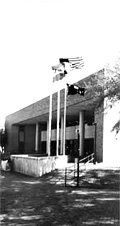
Larry A. Jackson Library Lander University
Introduction to Philosophical Inquiry Online Course
Abstract: This is the homepage for an Introduction to Philosophical Inquiry Online Course.
ReadMe1: Summary notes on getting started with your online course.
ReadMe2: Suggestions for beginning the study of philosophy of religion.
ReadMe3: Suggestions for beginning the study of philosophical ethics.
Online Syllabus HTML: HTML syllabus for the online course listing course information, requirements, and procedures. Designed for online access with hyperlinked analytical table of contents and index page.
Online Syllabus PDF: PDF syllabus for the online course listing course information, requirements, and procedures. Designed for printing out a hardcopy.
Online Course Assignment Schedule: Listing by date with hyperlinks for the reading, posting, and test assignments.
Textbook: Reading for Philosophical Inquiry: Listing by chapter HTML, PDF, and mp3 access to the course textbook
Course Tests
Test 1 (PDF): The Meaning of LifeTest 2 (PDF): Philosophy of Religion
Test 3 (PDF): Philosophical Ethics
Important! Submit your tests as an email attachment with .docx, .doc, .rtf, or .txt extension.
Where to Go for Help
Tutorials: A separate list of the tutorials or outline notes assigned on the course assignment schedule.
Frequently Asked Questions: If you need more information about how to do stuff, this is a good place to look after consulting the syllabus and before emailing the instructor.
Example Evaluations of Test Essay Question on Paley's Design Argument and James' Significance of Life. How essay questions are evaluated is shown by the evaluation of student essay answers.
Notes on How to Study: Some concise study tips and suggestions are offered for general preparation, deciding when to study, starting study, taking book notes, taking lecture notes, and reviewing for exams.
Further Reading: These sources provide reliable and helpful explanations of the philosophies introduced in this course. You are especially encouraged to consult these important references not only for your daily reading and but also in preparation for tests.
- Dictionary
of the History of Ideas: Studies of Selected Pivotal Ideas edited
by Philip P. Wiener, was published by Charles Scribner's Sons, New
York, in 1973-74. Now out of print, the Dictionary is published
online with the help of Scribner's and the Electric Text Center at the
University of Virginia. The dictionary includes articles on the
historical development of a broad spectrum of ideas in philosophy,
religion, politics, literature, and the biological, physical, and
social sciences.
Vol. 1 Entries: Abstraction in the Formation of Concepts – Design Argument.
Vol. 2 Entries: Despotism – Common Law.
Vol. 3 Entries: Concept of Law – Protest Movements.
Vol. 4 Entries: Psychological Ideas in Antiquity – Zeitgeist
- The Internet Encyclopedia of
Philosophy (subtitled "A Field Guide to the Nomenclature of Philosophy")
consists of regularly updated original articles by fifteen editors,
one hundred academic specialists, and technical advisors. The articles
are authoritative, peer-reviewed, and available for personal and
classroom use. The general editors are James Fieser and Bradley
Dowden. The site is most useful for students in obtaining secondary
source information on the key terms and personages of philosophy.
The Internet Encyclopedia of Philosophy can also be recommended for
obtaining an overview of the problems of philosophy for background
readings for lectures and papers. In general, the articles are well
researched and are accessible by undergraduates. The
Stanford Encyclopedia of
Philosophy, its main competitor, is perhaps better suited for more
advanced work.
- A Dictionary of
Philosophical Terms and Names. This well-informed guide, constructed
by Garth Kemerling, provides and effective gateway for insight into philosophical
terms and names for the beginning student of philosophy. Concise entries include
recommended readings and are cross-linked and hyperlinked to additional reliable
sources on the Internet including The Internet Encyclopedia of Philosophy,
The Stanford Encyclopedia of Philosophy, The Columbia Encyclopedia,
The Perseus Digital Library, Dictionary of Philosophy of Mind,
and The Catholic Encyclopedia. This resource is a functional, convenient,
and helpful beginning for the study of philosophical terms and persons.
Entries are locatable by alphabetical browsing.
- The Dictionary of
Philosophy (New York: Philosophical Library, 1942). Edited by Dagobert D.
Runes, the dictionary includes terms from ancient, medieval, and modern philosophy with
terms from Eastern philosophy as well — with definitions by over 70 notable philosophical
specialists. Although dated in some respects, this work is one of the best on the web
for short accurate entries.
- The Stanford Encyclopedia of Philosophy
is a continuously updated reference work and is a publishing project of the Metaphysics
Research Lab at the Center for the Study of Language and Information (CSLI) at Stanford
University. The General editor of the Stanford Encyclopedia is Edward
N. Zalta. Authors of subject entries are well-known scholars in their fields; even
so, the subjects discussed are authoritative and well balanced. The Encyclopedia
is the most scholarly general source for philosophy on the Internet and is
essential as a starting point and background research for philosophy term
papers.
- Wikipedia an online free encyclopedia
for all subjects, not just philosophy, contains over a half-million articles
maintained and edited by Wiki according to the philosophy of the free software
movement. The project was founded by Jimmy Wales, and its strengths are
its decentralization, peer reviews and thousands of contributors from all
over the world. Articles on philosophical topics are especially useful in
their breadth and variety. The site is especially recommended for an accessible
introduction and survey of philosophical topics for review.
- Additional helpful authoritative philosophical reference works are listed on this page of this website: General Philosophy Links


“[T]he point of philosophy is to start with something so simple as not to
seem worth stating, and to end with something so paradoxical that no one will believe
it.”
Bertrand Russell, “The Philosophy
of Logical Atomism” in Logic and Language (London: George
Allen & Unwin, 1956), 193.
Relay corrections or suggestions to philhelp@gmail
Read the disclaimer concerning this page.
1997-2025 Licensed under GFDL
and Creative
Commons 3.0


The “Copyleft” copyright assures the user the freedom
to use,
copy, redistribute, make modifications with the same terms.
Works for sale must link to a free copy.
The “Creative Commons” copyright assures the user the
freedom
to copy, distribute, display, and modify on the same terms.
Works for sale must link to a free copy.